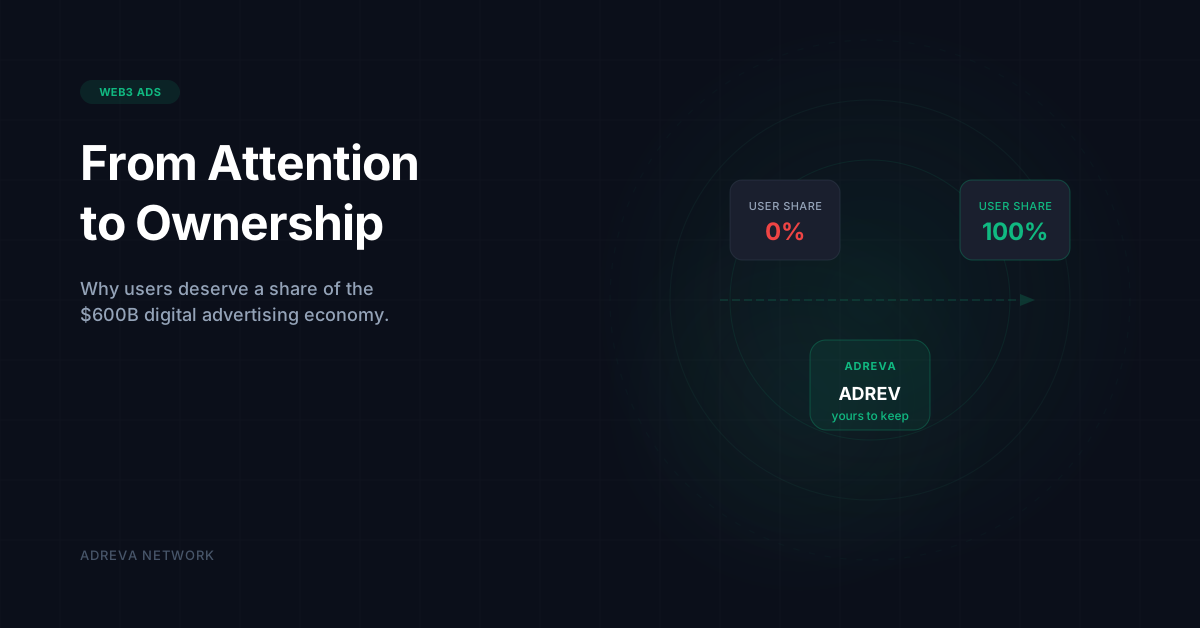
Here's a number that should bother you: $0. That's what the average internet user earns from the $600 billion digital advertising industry that is entirely dependent on their attention, their data, and their engagement.
Users scroll, click, watch, and share. They generate the behavioral data that powers targeting. They provide the eyeballs that advertisers pay for. And in return, they get... ads they didn't ask for, privacy violations they didn't consent to, and an internet experience optimized for engagement metrics rather than their wellbeing.
The Broken Value Chain
In the current model, value flows in one direction: from advertisers, through a chain of intermediaries (DSPs, SSPs, DMPs, ad exchanges, verification vendors), to publishers. Users sit at the end of this chain, providing the most essential input—their attention—while capturing none of the value.
This isn't just unfair. It's economically inefficient. When the people generating value don't participate in the economics, you get misaligned incentives everywhere:
- Publishers optimize for ad density over user experience
- Platforms optimize for engagement (read: outrage) over quality
- Ad tech optimizes for data extraction over consent
The Ownership Model
Web3 introduced a powerful idea: users can be stakeholders, not just customers. In DeFi, liquidity providers earn yield. In play-to-earn gaming, players earn tokens. In DePIN networks, node operators earn for contributing infrastructure.
Why should advertising be any different? If you're contributing your attention—arguably the scarcest resource in the digital economy—you should earn for it.
How ADREV Points Work
At Adreva, every ad interaction is compensated. View an ad? Earn ADREV points. Click through? Earn more. Complete a video ad? Earn even more. These points accumulate in your account and represent real value that you can track and eventually redeem.
But ADREV isn't just about compensation. It's about control. Users choose which ad categories they see. They set their own availability. They can pause, resume, or adjust their participation at any time. The relationship between user and advertiser becomes consensual and bilateral, rather than extractive and one-sided.
Better for Advertisers Too
Here's what's counterintuitive: paying users for attention actually improves advertiser outcomes. When users opt in and choose their ad categories, relevance goes up dramatically. When users are compensated, they engage more genuinely—no more rage-clicking or accidental taps. And when the entire system is transparent, advertisers can see exactly what they're paying for.
Early data from the Adreva network shows engagement rates 3-5x higher than traditional display advertising. That's what happens when attention is earned, not stolen.
The Inevitable Shift
The move from attention extraction to attention ownership isn't a question of if—it's a question of when. As privacy regulations tighten, cookies disappear, and users become more aware of their digital rights, the companies that build on consent and shared value will win. The rest will be left competing in an increasingly adversarial, expensive, and fraudulent system.
Users deserve a seat at the table. At Adreva, we're building the table.